
Dandruff Basics
Dandruff Ka Gharelu Ilaj: Which Home Remedies Hold Up
Lemon, dahi, neem, tea tree, coconut oil, aloe vera, ACV: we check popular dandruff ka gharelu ilaj against the evidence and explain how to try them safely.
SCALP REPORTS · PAKISTAN
Find your scalp type, decode shampoo labels and follow a clear plan. We cover Pakistan's heat, humidity, hard water and dry winters, and tell you when flakes mean a doctor visit.
Lemon, dahi, neem, tea tree, coconut oil, aloe vera, ACV: we check popular dandruff ka gharelu ilaj against the evidence and explain how to try them safely.

Dandruff ka ilaj kaise kare? A clear 4-week plan using anti-dandruff shampoo correctly, a maintenance routine, mistakes to avoid, and when flakes need a doctor.
Dandruff ka ilaj in Urdu-English for winter: why khushki gets worse from November to February in Pakistan, and a simple cold-weather scalp routine that works.
Dry scalp or dandruff? How to tell the difference by flakes, feel and season, why they need opposite care, and a dry scalp ka ilaj routine for Pakistan.
Comparing anti-dandruff shampoo ingredients available in Pakistan: ketoconazole, zinc pyrithione, selenium sulfide, salicylic acid, coal tar and more, and how to choose.
Dandruff gone but hair still looks thin? A simple maintenance routine to keep flakes away, protect hair from breakage, and support healthier-looking hair after dandruff.

Does dandruff cause hair fall? How scalp inflammation and scratching increase shedding and breakage, what's temporary vs permanent, and how to protect your hair.

Seborrheic dermatitis in Pakistan explained: greasy flakes, redness on scalp, eyebrows and nose, triggers, treatment options a dermatologist may use, and daily care.
| Ingredient | What it does | Good to know |
|---|---|---|
| Ketoconazole 1–2% | Antifungal; reduces the Malassezia yeast linked with dandruff | Leave on 3–5 min; 2% is often pharmacy or prescription |
| Zinc pyrithione | Antifungal and antibacterial | Good for regular use; found in many local shampoos |
| Selenium sulfide | Slows skin-cell turnover, antifungal | Can discolour light or coloured hair; rinse well |
| Salicylic acid | Loosens and lifts thick scale | Can dry the scalp; pair with a gentle conditioner |
| Coal tar | Slows skin-cell build-up | Strong smell; can stain; ask a doctor |
| Tea tree oil | Some antifungal activity in small studies | Can irritate; patch test; never use undiluted |
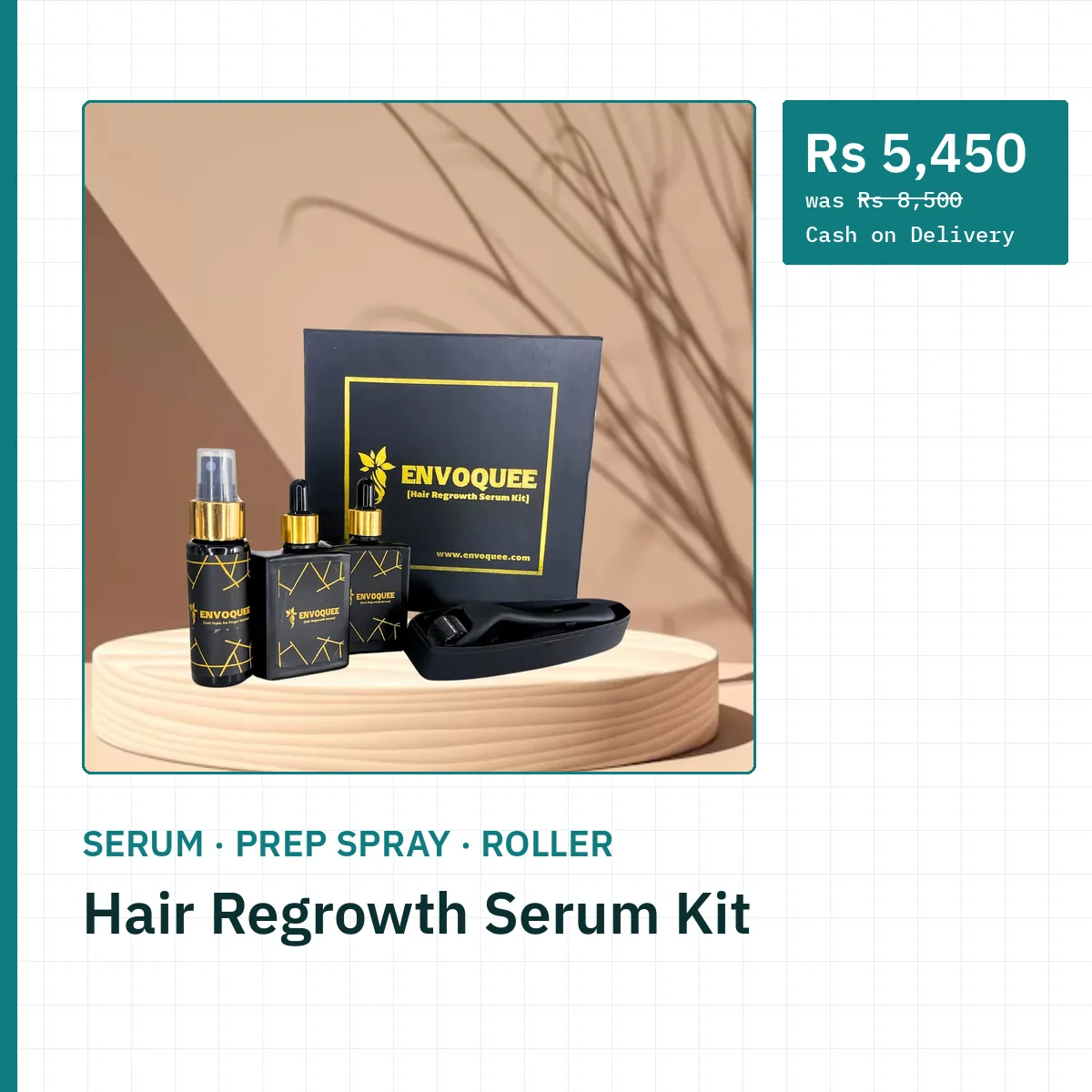
The serum + derma roller kit
Questions people search
Use an anti-dandruff shampoo with ketoconazole, zinc pyrithione or selenium sulfide two to three times a week. Massage it in and leave it on for three to five minutes before rinsing. Most people see improvement in two to four weeks, after which once a week often keeps flakes away.
Dandruff tends to come and go, but it can be controlled well. Many people need a maintenance wash with an anti-dandruff shampoo once a week to keep it from coming back.
Dry scalp gives small white flakes and tightness, often in winter or after hot showers. Dandruff flakes are usually larger, yellowish and greasy, and they come with an oily scalp. The two need different care.
Dandruff itself doesn't cause permanent hair loss. But the inflammation and scratching that come with it can increase shedding and breakage. Controlling the dandruff often reduces that extra fall.
Oil can ease dryness, but on a dandruff-prone scalp heavy oils can feed the yeast linked with dandruff and make it worse. Don't leave oil on overnight if you have greasy flakes.
There is little good evidence for lemon, dahi (yogurt) or onion. Lemon can sting and irritate the scalp. An antifungal shampoo is more reliable. If you try a home remedy, patch test it first.